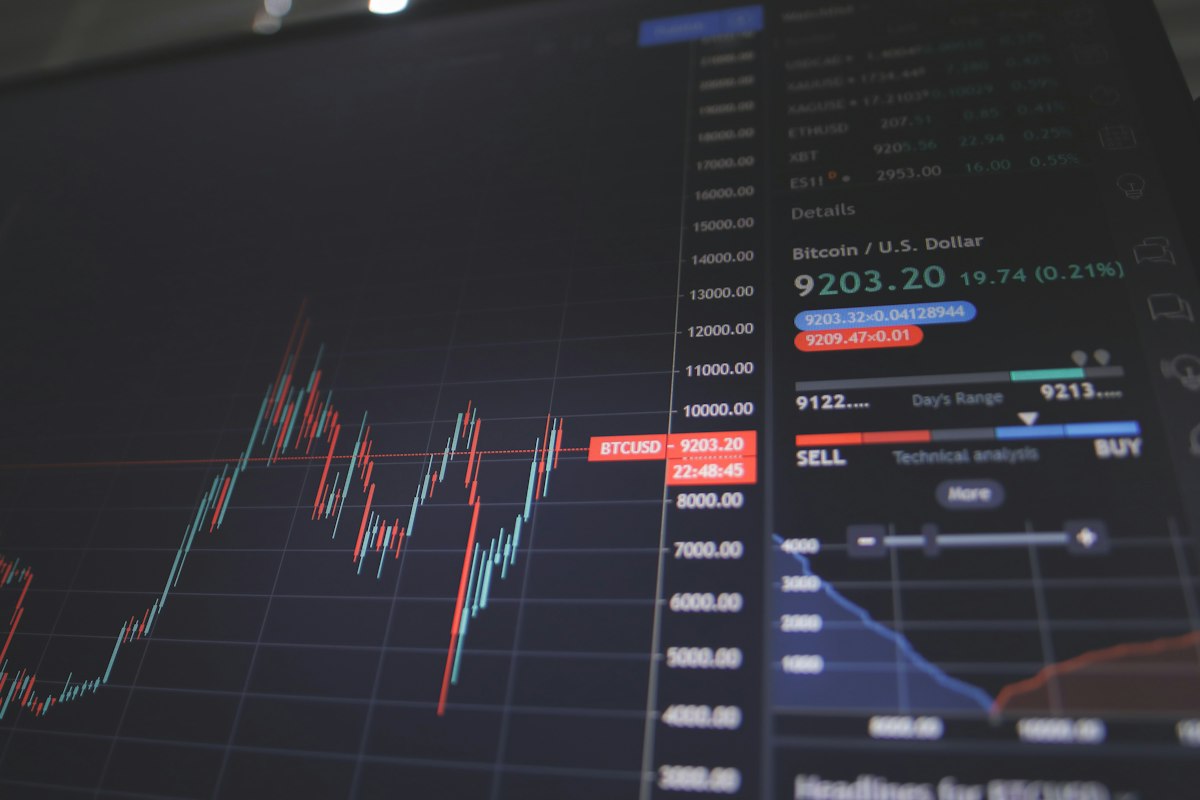
What an index actually measures
Rather than picking one company and hoping its specific story plays out, index trading gives you directional exposure to an entire market or sector. When the FTSE 100 rises, it means the combined value of the 100 largest companies listed on the London Stock Exchange has increased. When it falls, the opposite is true. You are not taking a view on Shell or AstraZeneca individually. You are taking a view on the direction of a defined slice of the market as a whole.
That distinction matters. Individual companies can move sharply on a single piece of news: a profit warning, a regulatory decision, a change in management. An index absorbs those single-company events because hundreds of other constituents dilute the impact. Trading an index is a way of expressing a macro view, whether that is a belief that UK equities will perform well this quarter, or that US technology stocks are overvalued, without the company-specific risk that comes with owning individual shares.
How an index is actually built
An index is not an average of its constituent share prices. Most major indices, including the FTSE 100, are capitalisation-weighted. This means each company's influence on the index value is proportional to its market capitalisation: the total market value of all its outstanding shares.
In a capitalisation-weighted index, the largest companies carry the most weight. A company with a market capitalisation of £100 billion has a proportionally larger effect on the FTSE 100 than one worth £5 billion. A 3% move in a mega-cap constituent such as Shell, HSBC, or AstraZeneca shifts the index value more than a 10% move in a smaller constituent. This weighting structure means that the index is not an equal representation of all 100 companies: it is dominated, in practice, by the top 10 to 20 by size.
The practical implication for traders is that understanding the largest constituents in an index gives you a clearer picture of what drives it day to day. The FTSE 100's heavy weighting in energy, financial services, and mining means it reacts more directly to oil prices, interest rate decisions, and commodity market conditions than an index with a different sectoral make-up.
The major indices traders watch
The FTSE 100 is the natural starting point for UK traders. It covers the 100 largest companies listed on the London Stock Exchange and is widely covered in the UK financial press. Because many of its constituents are large multinationals, it is often influenced by global conditions, dollar strength, and commodity prices as much as by purely domestic UK factors.
The S&P 500 is the most widely watched equity index in the world. It covers 500 US companies across all sectors and is the benchmark against which most professional fund managers measure their performance. Its movements affect markets globally, and it is frequently the index that sets the tone for other markets when it opens each afternoon, UK time.
The Nasdaq 100 is a technology-heavy index covering 100 of the largest non-financial companies listed on the Nasdaq exchange. It includes companies such as Apple, Microsoft, and Nvidia. Because technology company valuations are sensitive to the expected future cash flows, this index tends to react more sharply to interest rate expectations than the broader S&P 500.
The DAX 40 is Germany's primary stock index and a key benchmark for European equity markets. Its heavy weighting in manufacturing, industrials, and financial services makes it a useful indicator of European economic conditions, particularly those affecting export-driven industries.
Why trade an index instead of individual stocks
The first reason is diversification of risk within a single trade. A profit warning from one company can send its share price down 20% in a session. That same event barely registers in the FTSE 100, because the index has 99 other constituents absorbing the movement. Trading an index removes the catastrophic single-name risk that comes with picking individual stocks.
The second reason is directional simplicity. If you believe the UK economy is entering a period of growth, or that central bank policy is turning favourable for equities, buying the FTSE 100 is a single trade that expresses that view. You do not need to identify which specific companies will benefit most, or worry about company-specific headwinds. The index gives you broad, clean exposure to the direction you are betting on.
The third reason is that indices are easy to follow. The drivers of major index movements, central bank decisions, GDP data, inflation figures, and earnings seasons, are all well-publicised and heavily analysed. A new trader can follow the FTSE 100 or S&P 500 without needing to develop deep knowledge of any single sector or company.
"Index trading is directional trading. You are taking a view on a market, not on a business. That simplicity is the point."
How retail traders actually access indices
You cannot buy an index in the same way you buy a share. An index is a number: a calculated value derived from the share prices of its constituents. To gain exposure to that number moving up or down, you need an instrument that tracks it.
The two most common instruments for retail index traders are CFDs (Contracts for Difference) and spread betting. In both cases, you choose a direction, long if you expect the index to rise and short if you expect it to fall. You set a stake size, which determines how much you gain or lose per point of index movement. You set a stop loss to define your maximum acceptable loss on the trade. And you manage the position until you choose to close it.
Both CFDs and spread betting use margin, meaning you only need to deposit a fraction of the full notional value of the position. This introduces leverage, which amplifies both gains and losses relative to the margin you put up. For a full explanation of how CFDs and leverage work mechanically, see our What Is a CFD page.
A third option is the index tracker ETF. These are funds that hold shares in the constituent companies of an index in the correct proportions and aim to mirror the index return. ETFs are available through standard share dealing accounts and ISAs. They give index exposure without leverage and without the costs associated with rolling CFD or spread bet positions, making them more suitable for longer-term investors than for active traders.
What moves an index
Individual company earnings are the most direct driver of index movements during earnings season, which typically runs in January to February and July to August for most major markets. When large constituents report results that beat or miss expectations, those moves ripple through the index in proportion to the company's weighting. A strong earnings season from the biggest tech companies can lift the Nasdaq 100 even if the broader economy is sluggish.
Central bank decisions, particularly interest rate changes and forward guidance from the Bank of England, the US Federal Reserve, and the European Central Bank, affect all equity indices. Lower interest rates generally support equity valuations by reducing the discount rate applied to future company earnings and making equities comparatively more attractive than bonds or cash. Rate rises tend to have the opposite effect.
Macroeconomic data, including GDP growth figures, employment reports, and inflation readings, shapes expectations about future central bank decisions and therefore feeds into index prices. A stronger-than-expected jobs report in the US, for example, might cause the market to anticipate that the Federal Reserve will keep rates higher for longer, which can weigh on both the S&P 500 and, to a lesser extent, the FTSE 100.
Finally, sector composition matters more than many new traders realise. The Nasdaq 100 reacts much more strongly to interest rate expectations than the FTSE 100 because its largest constituents are technology companies whose valuations depend heavily on future earnings projections. The FTSE 100, with its larger weighting in financials and energy, responds differently to the same macroeconomic inputs. Understanding what your chosen index is made of is one of the most useful things you can do before you start trading it.
// KEY TAKEAWAYS
- An index measures the combined performance of a defined basket of stocks — you are trading a market or sector, not a single company.
- The FTSE 100 is the primary index for UK traders, tracking the 100 largest companies listed on the London Stock Exchange.
- Retail traders access indices through CFDs or spread betting, since you cannot buy an index directly as you would a share.
- Indices are weighted — larger companies have a proportionally larger effect on the index value.
- Index prices move on constituent earnings, macroeconomic data, and the weighting of sectors within the basket.
Frequently Asked Questions
// RELATED GUIDES